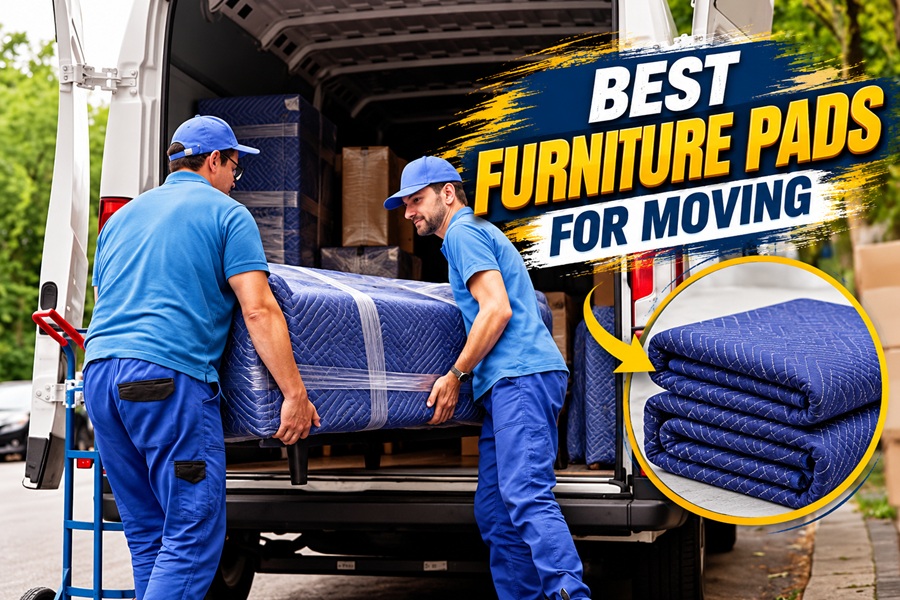


A table can survive years of everyday use and still get scratched during a short trip through a doorway. Moving exposes furniture to friction, bumps, tight corners, and contact with other items often all at once.
Furniture pads create a cushioned barrier around vulnerable surfaces. They can help protect wood finishes, upholstery, and appliance exteriors, but they work best when properly fitted and combined with careful handling.
The best furniture pads for moving aren’t necessarily the thickest or most expensive. They’re the ones that suit your furniture, moving conditions, and plans for reuse.
Moving Pads, Blankets, and Sliders: What’s the Difference?
“Moving pads” and “moving blankets” usually describe the same general product: large padded coverings used to protect items during handling and transport. Sellers may use the terms interchangeably, so compare construction rather than names.
Padded furniture covers are shaped for particular items, such as sofas or appliances. They can simplify wrapping but offer less flexibility across different furniture sizes.
Furniture sliders and adhesive felt pads serve another purpose. Sliders help reposition suitable furniture on compatible floors, while felt pads reduce everyday floor scratching. Neither replaces protective wrapping during a move.
Common Materials and Construction
Moving blankets vary in their outer fabric, filling, stitching, and overall weight.
| Type | Useful for | What to check |
| Quilted cotton or cotton-blend blankets | General furniture protection and repeated use | Fabric condition, padding density, and care instructions |
| Synthetic or blended blankets | General moving and budget-conscious purchases | Abrasion resistance, softness, and stitching |
| Lightweight economy pads | Short moves or an additional protective layer | Limited cushioning and durability |
| Fitted padded covers | Frequently moved items of a particular shape | Dimensions, closures, and coverage |
Quilting helps keep the filling distributed instead of allowing it to collect in one area. Reinforced edges and sound stitching are useful when blankets will be handled repeatedly.
Material alone doesn’t determine quality. A well-made blended blanket may perform better than a poorly constructed cotton one. Inspect the surface that will touch your furniture for rough areas, loose fibers, or debris.
How to Choose the Right Size and Thickness
Measure for full coverage
Blankets need to cover more than the visible top of a piece. Allow enough material to reach around edges and protect the sides likely to contact doorways or neighboring cargo.
Many full-size moving blankets measure around 72 by 80 inches, but dimensions vary. Large sofas, dining tables, and cabinets may need multiple overlapping pads.
Smaller pads are useful for chair backs, detached legs, and awkward shapes. A mixture of sizes is often easier to use than one oversized blanket on every item.
Balance cushioning with flexibility
Thicker padding generally offers more cushioning, but it can be bulky around handles, narrow stairways, and tight corners. Thin pads are easier to position but offer less protection against knocks.
Check the actual padding rather than relying only on words such as “premium” or “heavy-duty.”
Weight can help compare similar products, but confirm whether the advertised figure refers to one blanket or an entire bundle.
Plan coverage before buying
Make a list of large pieces and their exposed surfaces. Include separate protection for detached components and a few spare pads.
There’s no reliable blanket-per-room rule: an apartment full of delicate wood furniture may need more padding than a larger home with fewer pieces.
How to Wrap Furniture Properly
Good preparation prevents dirt and loose parts from causing damage beneath the padding.
- Clean and dry the surfaces
Remove grit and dust using a method appropriate for the finish. Make sure surfaces are dry before covering them.
Check every blanket for staples, splinters, sand, or oily residue. A dirty pad can scratch the item it is meant to protect.
- Remove loose components
Take out drawers or shelves where the furniture’s design and moving plan call for it. Remove protruding hardware or legs when practical, following assembly instructions.
Pack small fittings in labeled bags and keep them with the relevant assembly information.
- Cover vulnerable areas
Wrap broad surfaces, then overlap pads at exposed edges. Add suitable corner protection where needed, especially on sharp or fragile corners.
Keep seams and openings away from areas likely to rub against other objects.
- Secure the padding
Use moving bands or an appropriate securing method so the blankets cannot slide off.
Tape should attach to the protective wrapping, not directly to finished wood, upholstery, or painted surfaces. If using stretch wrap, apply it around the padded item without overtightening or trapping dampness.
- Check handling access
Make sure movers can maintain secure grips and see where they are stepping. Don’t lift furniture by its blanket unless it is a purpose-designed, rated lifting product.
Match the Protection to the Item
Wood furniture: Use clean, soft padding and protect corners carefully. Delicate, antique, or recently refinished pieces may need specialist packing advice. Avoid direct contact with adhesive tape or plastic that could affect the finish.
Sofas and upholstered chairs: A suitable furniture cover helps protect against dirt, while padding adds protection from rubbing and impacts. Keep upholstery dry before wrapping.
Glass tabletops and mirrors: Moving blankets alone may not provide enough protection. Use appropriate corner guards and purpose-made boxes or crates, with secure support during transport.
Appliances: Pad exterior surfaces, but follow the manufacturer’s instructions for disconnection, preparation, and transport position. Blankets cannot replace shipping bolts or other required restraints.
Fragile projections: Decorative trim, thin legs, and protruding handles need more than extra blanket thickness. Remove them where possible or use protection that prevents pressure from reaching them.
Protect the Building and Secure the Load
Furniture padding doesn’t automatically protect floors, walls, or door frames.
Use floor runners or other coverings designed for the surface and expected traffic. Loose blankets can slide or create trip hazards, particularly on stairs, so they are not a safe default for floor protection.
Clear the route, measure narrow openings, and protect vulnerable doorway corners before carrying large pieces through.
Inside the vehicle, secure furniture using suitable restraints and anchor points. Blankets reduce contact damage but do not prevent cargo from shifting.
Keep heavy or sharp objects from pressing against delicate pieces, and don’t treat padded furniture as a safe base for stacking unrelated loads.
Should You Buy or Rent?
Renting can make sense for a one-time move, especially when blankets are available with the truck. Buying may be worthwhile if you move regularly or expect to reuse them for projects.
Compare the full cost, including rental duration, cleaning requirements, pickup, returns, and replacement charges.
Inspect rental pads before accepting them. Reject blankets with contamination, embedded debris, or damage that compromises coverage.
For purchases, check washing instructions and storage needs. Not every moving blanket is machine-washable, and bulky pads can take up considerable space.
After the Move
Remove wrapping once the furniture is safely positioned, particularly if moisture may have entered during transport. Moving blankets are not automatically suitable for long-term storage.
Clean the pads according to their labels, dry them thoroughly, and store them away from dampness and pests.
Final Thoughts
Moving pads work best as part of a complete protection plan. Choose adequate coverage, use clean materials, secure the wrapping, and prevent movement inside the vehicle.
Careful lifting and loading still matter more than any blanket. Padding helps limit damage it doesn’t make fragile furniture indestructible.