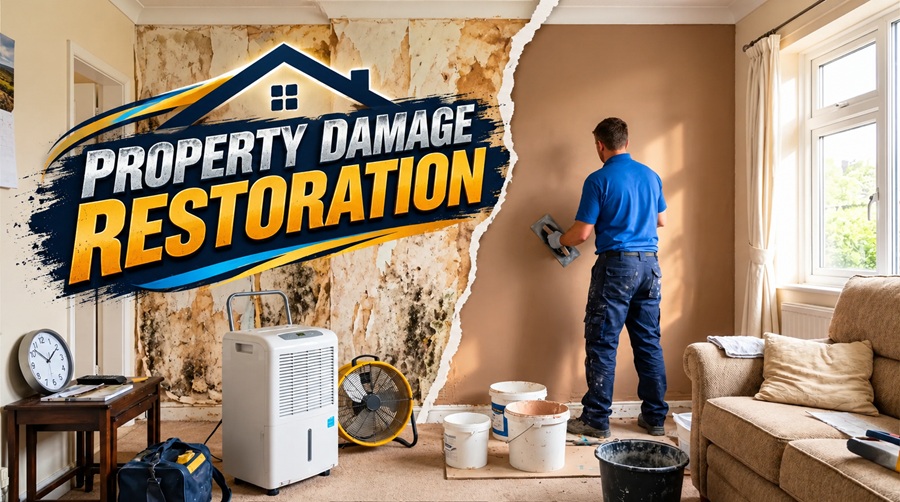


Water, fire, or storm damage can leave you facing several urgent decisions at once. Is the building safe? What can be saved? Which work should happen first?
Property damage restoration brings those decisions into a practical sequence: control immediate hazards, prevent further damage, assess the affected areas, and complete the necessary cleanup and repairs.
The process varies with the cause and extent of the loss. Understanding the main stages can help you ask better questions, keep useful records, and avoid rebuilding before hidden problems have been resolved.
- Put Safety Before Salvaging Belongings
A damaged building may contain hazards that aren’t obvious from the doorway. Water can reach electrical wiring, fire can weaken structural components, and saturated ceilings can collapse.
Do not enter an area that emergency responders or building officials have declared unsafe. After a serious event, wait for appropriate clearance before returning.
If you smell gas, suspect an electrical hazard, or see signs of structural instability, leave and contact the relevant emergency service or utility. Never enter standing water to reach an electrical panel.
Keep children and pets away from affected areas. Retrieving furniture or documents is not worth risking injury.
- Stop Ongoing Damage When It Is Safe
Emergency stabilization aims to prevent the situation from worsening. It is different from permanent repair.
Depending on the event, this may involve stopping a plumbing leak, covering a damaged roof, boarding broken openings, or extracting standing water.
Only take actions you can perform safely. For example, shutting off an accessible water valve may be reasonable, while climbing onto a storm-damaged roof is not.
Ask the contractor to explain which measures are temporary and what follow-up work they require. A tarp may limit incoming rain, but it does not mean the roof has been repaired.
- Assess and Document the Damage
A useful assessment looks beyond visible stains and debris. Water may have traveled beneath flooring, while smoke residue may extend into rooms untouched by flames.
Professionals may document affected materials, moisture readings, structural concerns, and contents requiring attention.
When safe, create your own record:
- Take wide photographs and close-ups.
- List damaged items and their approximate age.
- Save available receipts and model numbers.
- Record dates, conversations, and emergency work.
- Keep contractor reports and invoices together.
Document belongings before disposal whenever circumstances allow, but do not delay necessary safety measures simply to preserve evidence. Ask how urgent disposal will be recorded.
- Water Damage Requires More Than Surface Drying
Water can affect drywall, insulation, framing, cabinets, flooring, and personal belongings. The cleanup method depends partly on where the water came from and what it contacted.
A supply-pipe leak is not the same as sewage or outdoor floodwater. Contaminated water may require additional protective measures and removal of porous materials that cannot be safely restored.
Typical work includes extraction, selective removal, controlled drying, cleaning, and moisture monitoring.
A surface that feels dry may still conceal moisture. Contractors should use appropriate measurements and explain the drying targets before closing walls or installing finishes.
Do not assume that opening windows or running household fans will solve the problem. Uncontrolled airflow can spread contamination, and outdoor humidity may make drying less effective.
- Fire and Smoke Need Separate Assessment
Fire damage often involves several overlapping problems: heat, soot, smoke odors, structural damage, and water from firefighting.
Smoke can travel beyond the room where the fire started. Inspection may need to include adjoining spaces, contents, and potentially affected ventilation components.
Cleaning methods should match the residue and material. Wiping soot with unsuitable products can smear it or cause further damage, so avoid beginning a general household cleanup before assessment.
Odor treatment should address contaminated materials and residues rather than simply masking the smell.
Fire-exposed wiring, appliances, and structural elements may need qualified inspection before reuse, even if they appear intact.
- Prevent Mold and Other Secondary Damage
Prompt moisture control can reduce the chance of additional deterioration, but drying alone does not resolve every problem.
Musty odors, recurring dampness, or visible growth warrant investigation. Moisture may remain inside wall cavities or beneath finishes after the room looks normal.
Where mold is present, the plan should address both the affected materials and the moisture source. Painting over growth or using fragrance does not correct the cause.
Extensive contamination or complex building conditions may require specialized remediation. Before disturbing older materials, contractors should also consider whether asbestos or lead assessment is necessary.
- Decide What Can Be Saved
Not every damaged item needs replacement, but not everything can be safely restored.
Salvage decisions depend on the material, contamination, duration of exposure, condition, and replacement value. Solid furniture, documents, electronics, textiles, and upholstered items each require different evaluation.
Ask for an inventory distinguishing items to be cleaned, stored, repaired, or discarded. Confirm labeling and tracking procedures if belongings leave the property.
For valuable or sentimental possessions, request specialist advice early. Avoid powering up water- or fire-affected electronics to check whether they still work.
- Choose Contractors with Relevant Experience
A company experienced in minor water extraction may not be equipped for extensive fire damage or structural rebuilding.
Check applicable licensing, insurance, references, and experience with your type of loss. Ask who will supervise the project and which tasks will be subcontracted.
Request a written scope covering:
- Emergency measures and site protection.
- Removal, cleaning, and drying.
- Monitoring and documentation.
- Repair responsibilities.
- Exclusions and additional-work approval.
- Payment terms and scheduling.
Be cautious about pressure to sign broad agreements without an explanation. Emergency action may be necessary, but you should still understand what you are authorizing and how costs will be documented.
- Keep Insurance Discussions Separate from Contractor Promises
Notify your insurer promptly and follow the policy’s reporting requirements. Ask about documentation, emergency mitigation, temporary accommodation, and approval procedures for major work.
Coverage depends on the policy, cause of loss, and circumstances. A restoration contractor can provide estimates and evidence, but should not promise what your insurer will pay.
Keep copies of claim correspondence, estimates, receipts, and any instructions you receive. Record important telephone discussions in writing afterward.
If the proposed work changes, request an updated scope and cost explanation. Clarify responsibilities before reconstruction whenever possible, rather than discovering disagreements after the work is complete.
- Verify Conditions Before Rebuilding and Returning
Reconstruction should begin only after the relevant cleanup, drying, and stabilization requirements have been met.
Ask for documentation supporting that decision, such as moisture records, completed remediation checks, or required structural and electrical assessments. A fixed number of equipment rental days is not a substitute for verifying conditions.
Before handover, walk through the property against the agreed scope. Check outstanding repairs, permits, inspections, and equipment operation.
Obtain warranties, care instructions, and a list of unresolved items. Where occupancy approval is required, confirm it with the responsible authority rather than relying only on appearance.
Final Thoughts
Restoration is most effective when each stage prepares the property for the next. Safety, documentation, moisture control, appropriate cleaning, and verified repairs all matter.
You do not need to make every decision immediately. Focus first on preventing harm and further damage, then work through a clear, documented plan with qualified professionals.