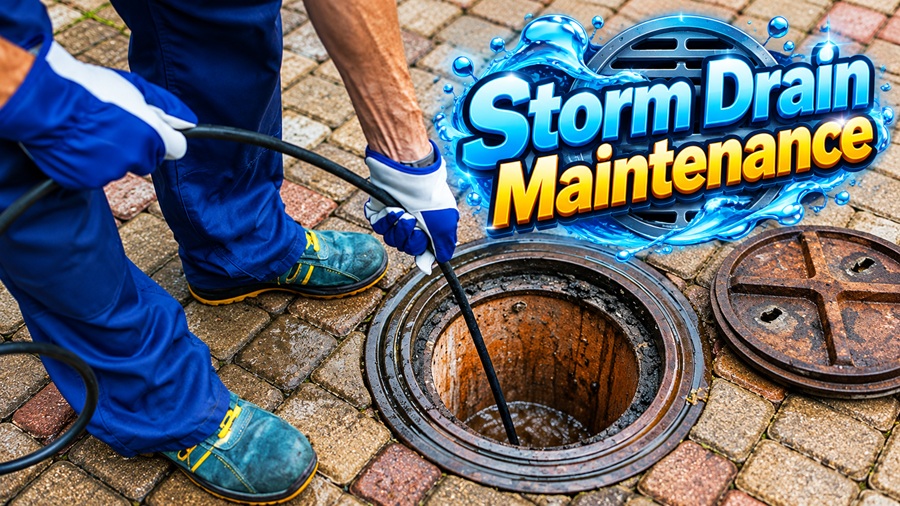
Why Storm Drain Maintenance Matters
Stormwater systems move rainfall away from roads, roofs, parking lots, and developed property. Leaves, sediment, litter, gravel, and organic debris can accumulate at grates, catch basins, and pipe entrances. EPA notes that runoff from developed surfaces can contribute to flooding, erosion, and infrastructure impacts, which makes drainage maintenance an important property-management task.
What Enters a Storm Drain
Seasonal leaves are a common source of debris, while construction activity can contribute soil, gravel, and sediment. Parking areas can introduce litter and other material. Landscaping can also direct mulch or loose soil toward inlets. Preventing pollutants from entering the system is preferable to relying entirely on downstream cleaning.
Inspection Before a Problem
A useful inspection checks grates, inlet openings, catch basins, visible pipe connections, surrounding pavement, and signs of repeated ponding. Damaged covers or structures should be documented. If the same inlet repeatedly overflows after debris removal, the cause may involve downstream restriction, poor grading, inadequate capacity, or another issue that simple cleaning cannot solve.
Preventive Scheduling
Storm drain cleaning services are most useful when scheduled before capacity is significantly reduced. Sites with mature trees, exposed soil, construction activity, or large paved areas may need more frequent inspection than low-risk properties. A maintenance program can combine routine checks, seasonal cleaning, and post-storm inspections.
Catch Basin Maintenance
Catch basins can allow sediment and debris to settle before water travels farther through the drainage network. As material accumulates, effective capacity decreases. Record inspection dates, sediment levels, debris quantities, and recurring problem locations. These records help property managers adjust the maintenance schedule using actual site conditions.
Property managers comparing storm drain cleaning services should review inspection frequency, debris removal, access requirements, disposal procedures, and how recurring drainage problems are documented.
Safety During Drain Work
Stormwater maintenance can involve heavy covers, traffic, slippery surfaces, contaminated sediment, and potential confined-space hazards. Workers should follow site-specific safety procedures and should not enter a confined space without the required assessment and controls. Traffic management may also be necessary around drains located in active parking areas or roadways.
Environmental and Disposal Considerations
Removed material should be handled according to applicable local requirements. Do not wash collected sediment, chemicals, or debris back into the drainage system. Stormwater can carry pollutants toward local waterways, so prevention and responsible disposal are part of effective maintenance.
Final Takeaway
Storm drainage maintenance is preventive infrastructure care. Regular inspection, timely debris removal, good records, and attention to recurring problem locations help preserve drainage capacity and reduce avoidable emergency work.
Quick Reference Tables
Maintenance Tasks
| Task | Purpose |
| Grate inspection | Find visible debris or damage |
| Catch basin cleaning | Remove settled sediment |
| Pipe inspection | Identify internal restrictions |
| Post-storm check | Find new debris or damage |
| Record keeping | Track recurring problems |
Frequently Asked Questions
How often should storm drains be cleaned?
Frequency depends on rainfall, vegetation, sediment, site use, and the consequences of blockage.
What is a catch basin?
It is a drainage structure that collects stormwater and commonly allows sediment and debris to settle.
Can leaves block storm drains?
Yes. Leaves can cover grates and accumulate inside drainage structures.
Should drains be checked after heavy rain?
Post-storm inspections can identify new debris, damage, ponding, and recurring issues.